
FAQs
Will this delay funeral services?
1
In most cases, no.
Private autopsies are typically completed promptly and coordinated to avoid unnecessary delays. We work closely with funeral homes to ensure services proceed as planned whenever possible. Any potential delay will be discussed before the examination so families can make informed decisions.
Who must authorize a private autopsy?
2
A private autopsy must be authorized by the legal next of kin or the person with legal authority to make decisions for the deceased. This is usually a spouse, adult child, parent, or legally designated representative. We verify authorization before proceeding.
Can this help with a legal case?
3
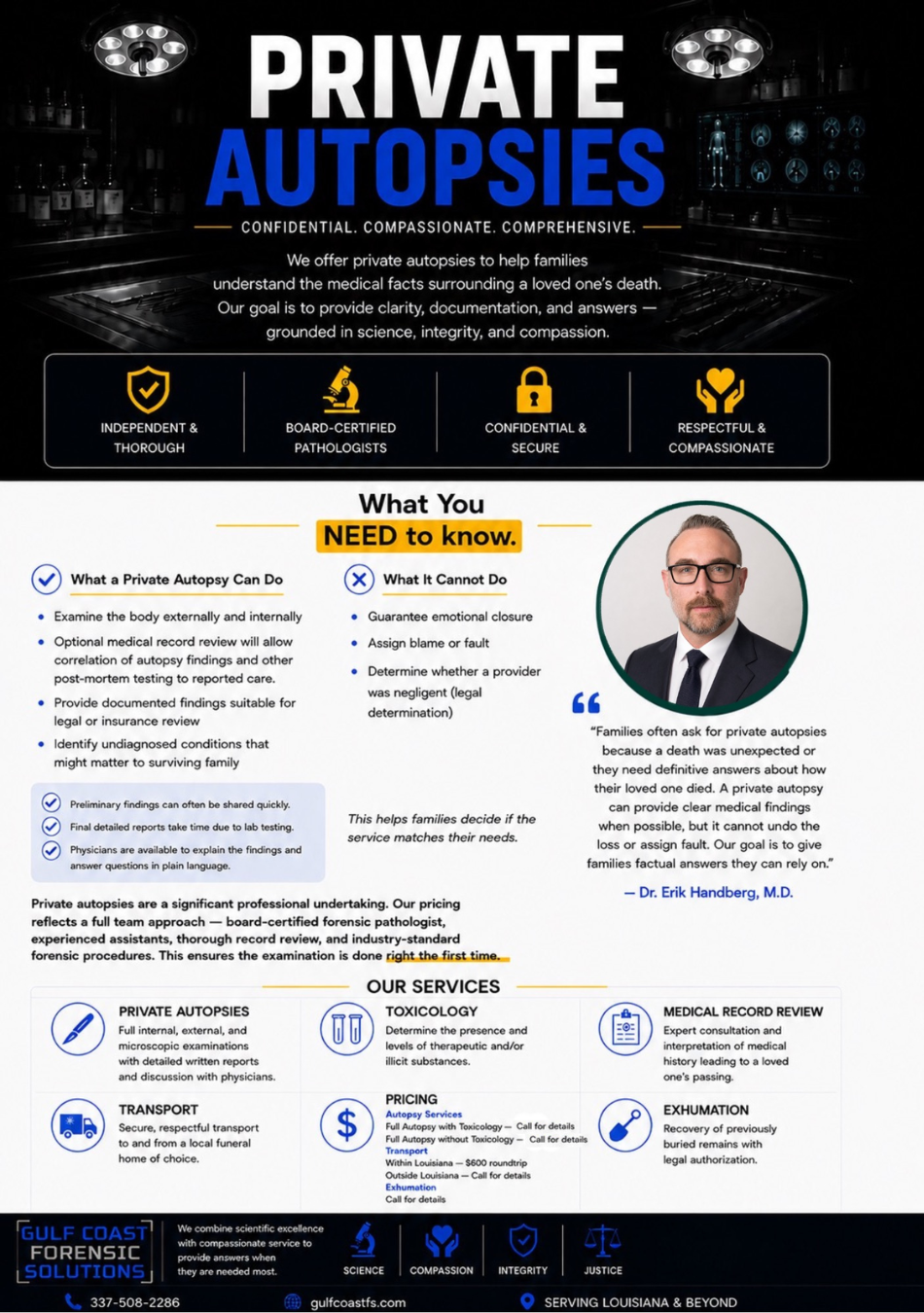
A private autopsy can provide medical facts and documentation, which may be important in legal or insurance matters. However:
We do not determine fault or negligence.
Legal conclusions are made by attorneys and courts.
If a family is considering legal action, we strongly encourage them to speak with an attorney first to ensure a private autopsy is appropriate and useful for their situation.
What does board certified mean?
4
A board-certified forensic pathologist is a physician who:
Completed medical school
Trained in pathology
Completed specialized fellowship training in forensic pathology
Passed a rigorous national certification exam
Board certification indicates that the physician has been recognized by peers for having the training, competence, and ethical standards required to perform post-mortem examinations involving sudden, unexpected, or unexplained deaths.
There’s only one board certification in forensic pathology. ‘Double’ or ‘triple’ board-certified just means the doctor has certifications in other medical areas as well. Those aren’t bad, but they don’t change the forensic autopsy itself.